

• parth@dhanlaxmirubber.com
  • No. 167, Pushpak Estate, Nika Tube Compound, Vatva, GIDC Estate, Phase 1, Vatva Gidc, Ahmedabad 382445

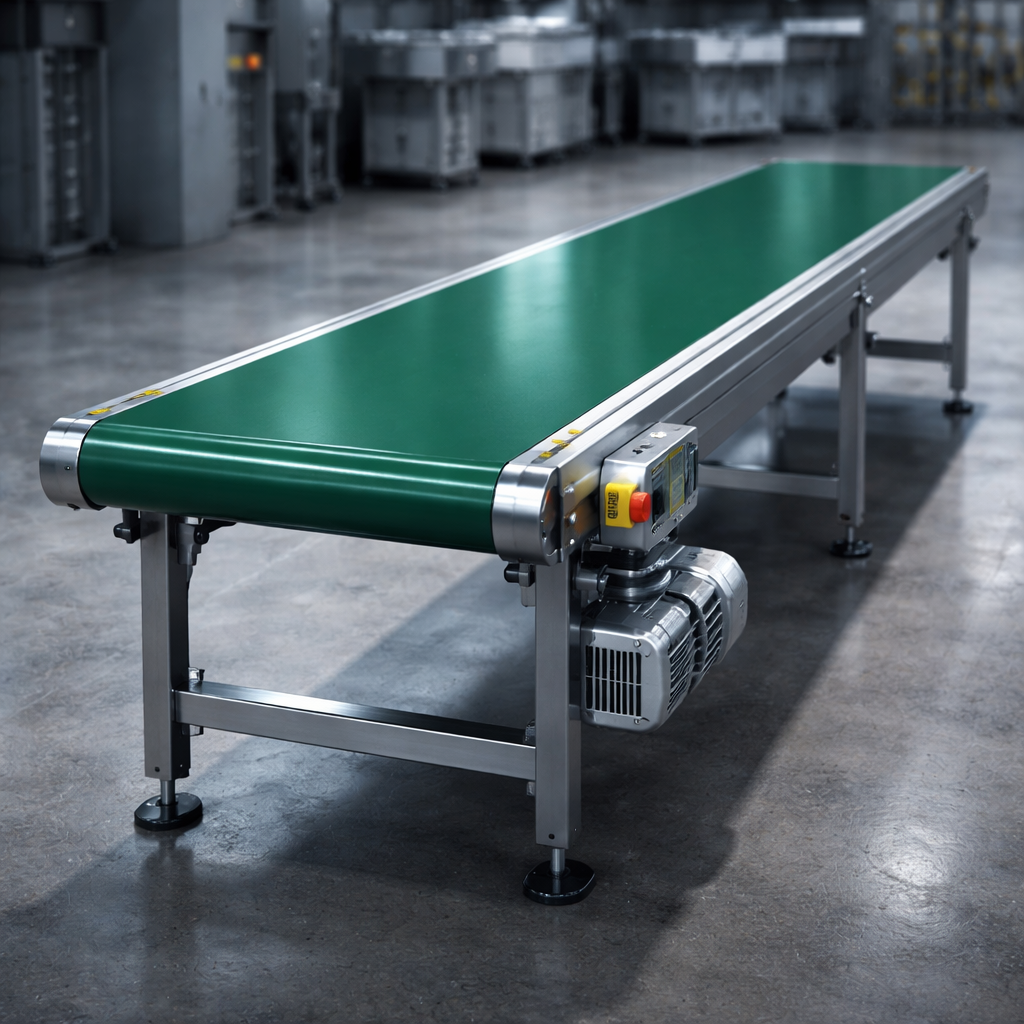
Flate Pvc Conveyor

Service Overview

A Flat PVC Conveyor is a highly efficient and versatile conveyor system designed for smooth and reliable transportation of materials across various industrial environments. Made from premium quality PVC material, this conveyor belt offers excellent durability, flexibility, and resistance to wear and tear. Its flat surface design ensures stable movement of products, making it suitable for handling lightweight to medium-weight items in different production and packaging processes.


Flat PVC conveyors are widely used in industries such as food processing, pharmaceuticals, packaging, logistics, and manufacturing units. The PVC material provides good resistance to chemicals, moisture, and abrasion, ensuring long-lasting performance even in demanding working conditions. Additionally, the smooth surface of the conveyor belt helps maintain hygiene standards, making it ideal for applications where cleanliness and efficiency are important.


These conveyors are designed to improve productivity by enabling continuous material movement while reducing manual handling. They are easy to install, require minimal maintenance, and can be customized in different sizes and configurations based on industrial requirements. With their strong construction and efficient operation, Flat PVC conveyors are an essential component in modern material handling systems.contact now

Frequently Asked Questions

  • What are the common applications for Flat PVC Belts?

    Flat PVC belts are highly versatile and used across various industries. They are ideal for:

    Food Processing: Transporting fruits, vegetables, and baked goods due to available food-grade options .

    Packaging and Logistics: Facilitating movement in sorting, labeling, and packaging lines .

    Manufacturing and Assembly: Enabling smooth transfer of components in industries like electronics and automotive .

    Pharmaceuticals: Providing a clean and stable surface for sensitive products .

  • What is the typical lifespan of a Flat PVC Belt?

    The lifespan depends on usage, load, and maintenance. With proper care—such as regular cleaning and avoiding overloading—these belts can last several years. Routine inspections for wear and tear are recommended to maximize longevity .

  • How do I choose the right belt for my industry?

    Selecting the right belt involves a few key considerations:

    Load Capacity: Determine the maximum weight the belt needs to handle.

    Dimensions: Ensure the belt width and length match your conveyor system to prevent slippage .

    Surface Texture: Decide between a smooth surface for general use or a textured surface for better grip on inclines .

    Chemical Compatibility: If your operation involves oils or greases, ensure the belt is resistant to them .

  • What maintenance does a Flat PVC Belt require?

    Maintenance is relatively simple:

    Regular Cleaning: Clean belts with mild detergent and water to remove debris and contaminants .

    Avoid Overloading: Stick to the recommended load capacity to prevent premature wear .

    Alignment Checks: Routinely check if the belt is running off-center. Misalignment can often be fixed by adjusting the idler rollers .

    Joint Inspection: Check that the joints remain flat and secure .

  • Can Flat PVC belts be used on inclined conveyors?

    Yes, Flat PVC belts can be used on inclines. However, to prevent materials from slipping, you may need a belt with a textured (rough) top surface or consider adding cleats . If the incline is steep, we also offer Sidewall PVC Belts specifically designed for vertical or space-constrained lifting .

  • Are there different types of PVC belt joints?

    Yes, the joint method impacts installation and maintenance:

    Clipper Joint (Mechanical): Uses a metal fastener for quick installation and easy replacement. Ideal for systems needing frequent belt changes .

    Adhesive / Hot-melt Connection: Provides a smooth, continuous surface. This is achieved through chemical bonding or heat, creating a strong and seamless finish