

• parth@dhanlaxmirubber.com
  • No. 167, Pushpak Estate, Nika Tube Compound, Vatva, GIDC Estate, Phase 1, Vatva Gidc, Ahmedabad 382445

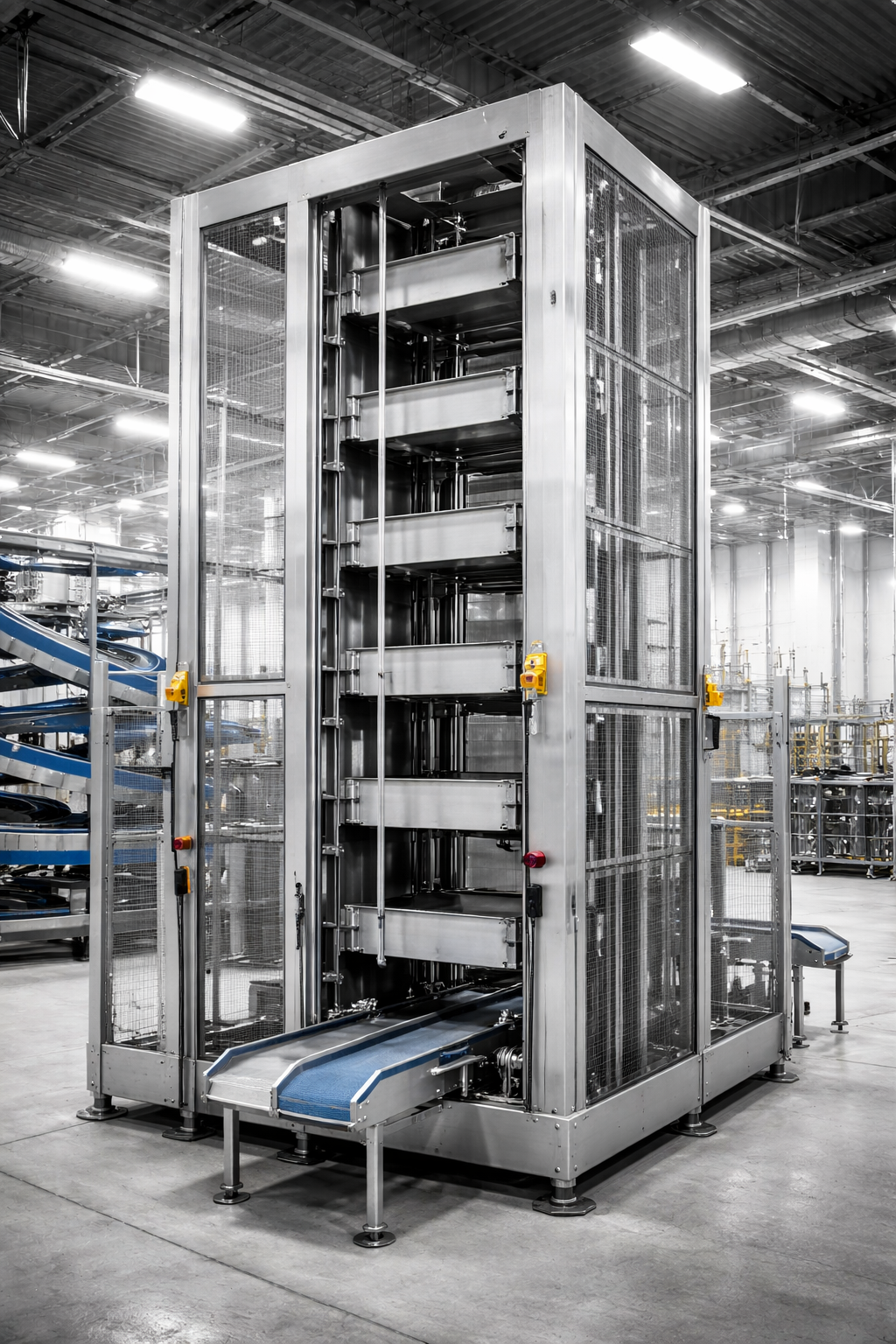
Continuous Vertical Conveyors

Service Overview

Continuous Vertical Conveyors are engineered for vertical material transport, providing a reliable and efficient solution for moving products between floors or workstations in manufacturing, packaging, and logistics operations. Unlike traditional lifts or elevators, these conveyors operate continuously, handling a steady flow of items without interruption. They are suitable for a wide range of products, including packaged goods, components, and bulk materials, and can be integrated with existing conveyor lines for seamless material flow. Built from durable materials and designed for safety and efficiency, Continuous Vertical Conveyors optimize space, reduce manual handling, and improve overall operational productivity in industrial settings.

Frequently Asked Questions

  • What is a Continuous Vertical Conveyor?

    A Continuous Vertical Conveyor (CVC) is a material handling system designed to move goods vertically between different levels using a continuous series of platforms, trays, or carriers.

  • Where are Continuous Vertical Conveyors commonly used?

    These conveyors are widely used in warehouses, logistics centers, manufacturing units, distribution hubs, and packaging industries for efficient vertical transportation of goods.

  • What are the advantages of Continuous Vertical Conveyors?

    Key advantages include continuous operation, high throughput, space-saving vertical transport, energy efficiency, and reduced manual handling.

  • What types of materials can be handled by Continuous Vertical Conveyors?

    Continuous Vertical Conveyors can handle cartons, boxes, totes, trays, packages, and other unit loads commonly used in industrial and commercial applications.

  • Can Continuous Vertical Conveyors be customized?

    Yes, Continuous Vertical Conveyors can be customized in terms of height, load capacity, speed, carrier type, and system design to meet specific operational requirements.